Film Diary (8.2.2026 - 8.8.2026)
A week dominated by sugary superhero fare, Peter Weller in distress, and possibly one of the greatest movies I've ever seen.
Below I'll provide a few words on each, though I'll want to expand on a few at a future point.
Sunday, August 2nd:
Spider-Man: Brand New Day (2026) / Thunderbolts* (2025) / Fantastic 4: First Steps (2025) / Deadpool & Wolverine (2024):
It's nearly impossible to have a conversation about the current status of Marvel Studios' moviemaking machine without speaking on the machine itself. Drama behind the production process and eleventh-hour narrative shuffling has become the primary focus of anyone still interested in these comic book adaptations, and there's very good reason for this: the colorless cookie-cutter slop offerings, each barely indistinguishable from the previous iteration, bring very little conversation material. Unless one has a high tolerance for terminally quippy dialogue and the 'Joseph Campbell for Dummies' format adopted by the majority of Marvel's output, it's easy to bounce off of these products completely without developing a framework for criticism.
These issues with "quality" and "aesthetics" and "merit" don't bug me in any particular way. I was born under a specific planetary alignment that shields me from the artlessness of these movies by providing a nostalgic reverence towards superhero fare that has intention, influences, and vision (Raimi Spider-Man Sun, Batman: The Animated Series Moon, Spider-Man for PS1 Rising). I don't mind digging through dirt on the promise of something emotionally resonating hiding within. No matter the beating I endure, I can still come out the other side willing to sit down for more slop. This is a blessing and a curse (not a 50/50 split however, more 17% blessing, 83% curse).
While the Infinity Saga benefited from a vision and novelty, the Multiverse Saga has been plagued by a lack of creativity and an abundance of cowardice. Flawed projects were scrapped instead of retooled, a solution that could have been unnoticeable if it didn't eventually lead to a reset of the entire narrative thrust of the saga. Replacing Jonathan Majors' as Kang was definitely the right move, but did this need to turn into the replacement of Kang himself as the big bad of the story? Especially when the villain, a multiversal being with many canon versions of himself, could have been recast without continuity being effected? Scrapping him and replacing him with a more popular character played by an actor that hearkens back to the glory days of the studio reeks of a certain type of studio-led desperation, one that casts all of the saga's previous attempts at creating a narrative through line as something arbitrary and unimportant.
With that being said, I do think that there are some creative highlights worth talking about. Deadpool & Wolverine's irreverence and joke-a-second nature provide a nice respite from the frustrations that come from trying to take these unsubstantial movies as something serious. The movie is a joke, all of these movies are jokes to an extent, and it's nice to acknowledge this while still being in this world. The movie makes its way past the finish line after barely overstaying its welcome, but is there not an interesting meta quality to being annoyed by a joke of a movie about an annoying joker? Is there not some verisimilitude to this plane of existence this movie traps you within?
Fantastic 4: First Steps also strays from the well-beaten paths of previous Marvel movies by boldly choosing to be comparatively restrained and relatively quiet, which is fascinating considering the cosmic stakes introduced in the narrative. The titular family unit refrains from bombast and friction, instead focusing on Star Trek: The Next Generation-esque problem solving and science talk. Everyone works well together in this retro-futuristic alternate history, and it's heartening to see a society come together to solve global problems.
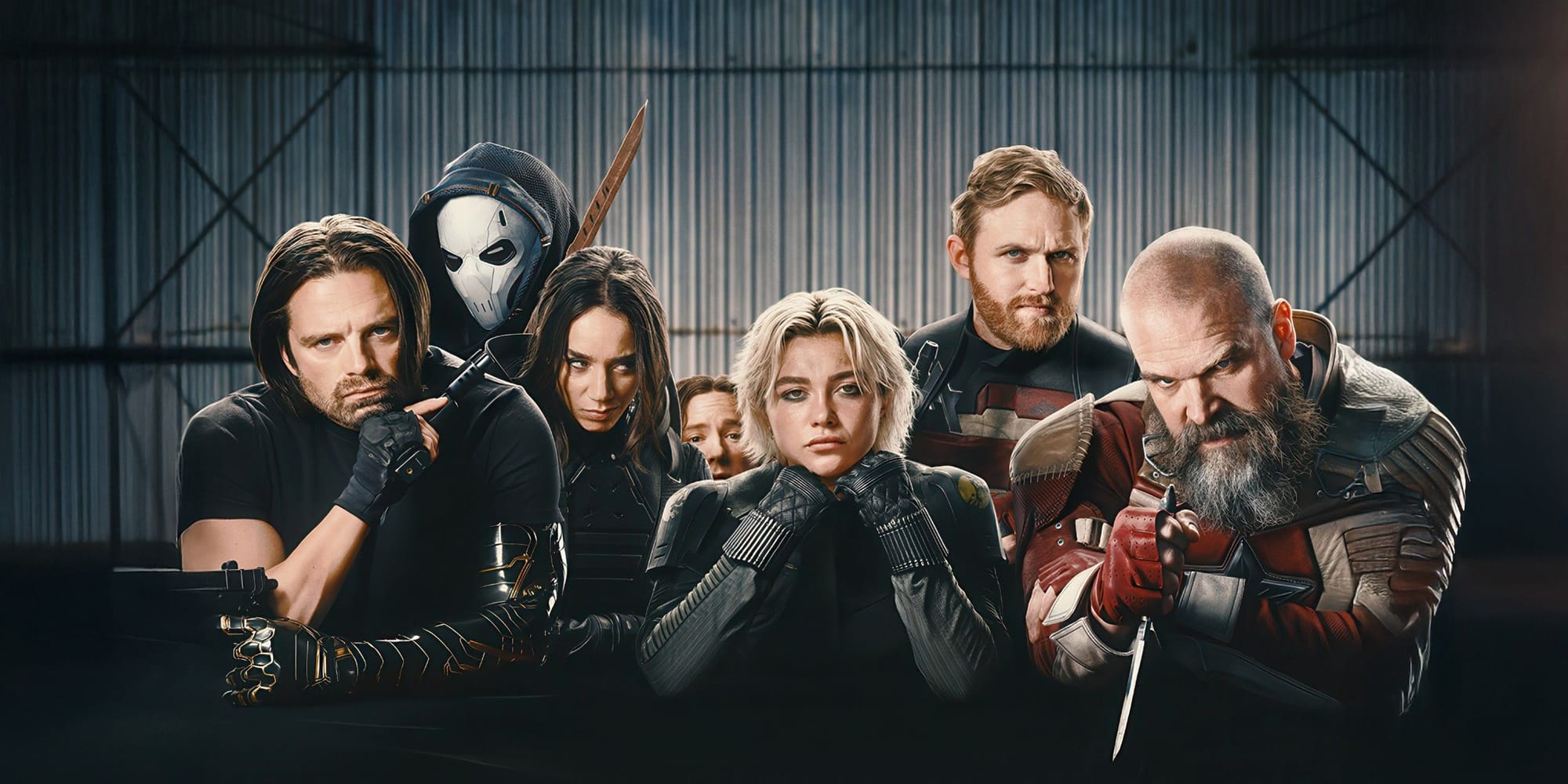
The high point of the saga for me is Thunderbolts*, a movie made up of interesting and underutilized characters from previous outings in what frequently feels like an actual movie. The Sentry/Robert Reynolds has long been one of my favorite superheroes from the comic world, being a walking analogy for addiction that hits close to home, so seeing him portrayed so fully by Lewis Pullman was satisfying. There's a wonderful moment early into the movie where, upon discovery of his powers, Bob stumbles upwards, spinning into the clouds in a dance both graceless and serene. And surely Marvel understands how much of a star they have in Florence Pugh, an effortlessly charismatic actor seemingly featured in every feature produced for their newest saga.
Which brings me to the movie that spurred this rewatch of the most recent movies released by the massive studio, Daniel Destin Cretton's Spider-Man: Brand New Day. It wasn't until after this viewing that it hit me how unconventional the live-action Spider-Man movies have been up to this point, focusing on Peter's relationship with Reformed Warmonger Tony Stark and general nostalgia bait. The newest feature instead brings Spider-Man back to his roots, specifically New Yawk. The city feels alive and colorful, even if the plot feels like more table setting for a saga not yet underway than something self-contained and Spider-Man focused.
King of New York (1990):
A brutal crime film that blew me away. I want to save most of my thoughts for a longer piece, but the immoral swamp Abel Ferrera creates with longtime collaborator Nicholas St. John and Christopher Walken is electrifying and all-consuming.
Tuesday, August 4th:
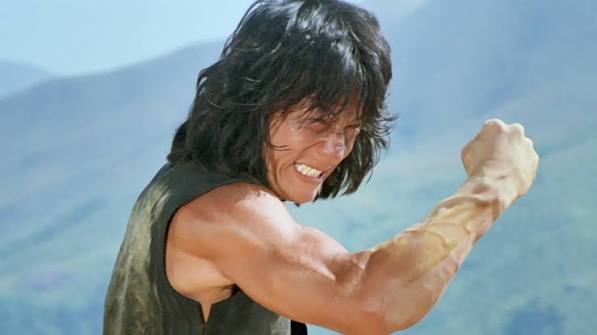
The Young Master (1980):
One of Jackie Chan's earliest films, but already filled with slapstick antics and impressively unconventional martial arts prowess. There's also something to be said about the creative utopia Jackie would become a part of within the Hong Kong cinema scene. After watching Sammo Hung's Wheels on Meals and Corey Yuen's In the Line of Duty II: The Super Cops, I couldn't help but notice how many cast and crew members are shared between productions. It's a wonderful thing.
Wednesday. August 5th:
Of Unknown Origin (1983):
It's not too difficult to sell a movie to me, and this small but incredibly entertaining 80's thriller is proof of that. One of the accounts I follow on BlueSky for recommendations and screening ideas described a film as 'Peter Weller vs. a rat the size of a small dog' and that was enough to make space before work to watch. For his first film as a lead, Weller holds considerable cool guy charisma, taunting his vermin foe with threats of his Jersey mobster friends and his past drug experiences as he escalates his traps and attacks.
Interestingly enough, I did pick up on a sort of mirroring between Weller's banking executive and the rat mother itself, as both work diligently to provide for their offspring a comfortable life. There's also a sense of the rat being a manifestation of Weller's financial insecurity and fears of sliding into poverty, as he's still paying off a massive townhouse renovation and fending off competitors at work vying for his role.
Thursday, August 6th:
Leviathan (1989):
My second 'Peter Weller vs.' film of the week was less successful than the first. Leviathan (from same director of Of Unknown Origin, George Cosmatos) is a fatally derivative creature feature where a crew of scientists and workers mining rare minerals on the bottom of the ocean are confronted with a mutating fish-human hybrid. Heavily indebted to Alien's claustrophobic space trucker aesthetic and The Thing's shapeshifting threat, Leviathan shows some promise in the build-up and design of its monster (I'm a huge sucker for a fish-man), the stock characters and tired, trope-y screenplay. Weller is possibly the only actor that emerges unscathed from the picture, alongside natural, often confrontational one put in by the underrated Ernie Hudson.

Friday, August 7th:
Screamers (1995):
My final 'Peter Weller vs.' entry ended up being more enjoyable than the second by virtue of being more interesting, but not as engaging or satisfying as the first. Screamers, adapted from a story by Philip K. Dick, exists within a compelling world of subjugated off-world workers and an evolving human-made robot that is wholly Dickian (Dickish? Dickesque?). Its low budget leads to some schlocky scenarios and dated visuals, but as I was raised on SyFy original movies, my tolerance for those aspects of the film are pretty substantial. While this three film Weller excursion wasn't 100% successful, I did come out of it with a greater respect for the actor. Even when rattled, he radiates with intensity and composure.
Saturday, August 8th:
Ip Man (2008):
While I'm more of a fan of Jackie Chan's blend of Looney Tunes, kitchen sink kung-fu set pieces, Ip Man rapid-fire drumbeat provides a visceral thrill to balance the occasional melodrama of the central narrative. And those punching sound effects are just sublime.
The Box (2009):
What does a studio do with a writer/director like Richard Kelly? His potent brews of sci-fi concepts within period piece packages reek of a filmmaker concerned with making his movies feel and look smarter than they are, but a surprising amount of depth exists within the glossy surface. Donnie Darko, perhaps my least favorite of Kelly's films, blends the time travel concept with an 80's nostalgia piece to create a foreboding, if not occasionally didactic, film on the ending of innocence that engulfs both Donnie and, thematically, his entire generation.
And where do I even begin on Southland Tales? I highly recommend Ethan Warren's piece for Bright Wall/Dark Room to get a sense of the much derided film's recent reevaluation, but I would also love to write my own piece on it. Despite its dark comedy and biting satire, I still view it primarily as an alternate history science fiction film, with a tone that has erected a McMansion on the line between high and low art, with its deep intertextual connections between modern poetry, Philip K. Dick, and the Book of Revelation featured alongside porn stars and dick jokes. Its a one of a kind vision that has proved to be less prophetic than it is diagnostic of a uniquely American mental disorder caused by blowback and national trauma.
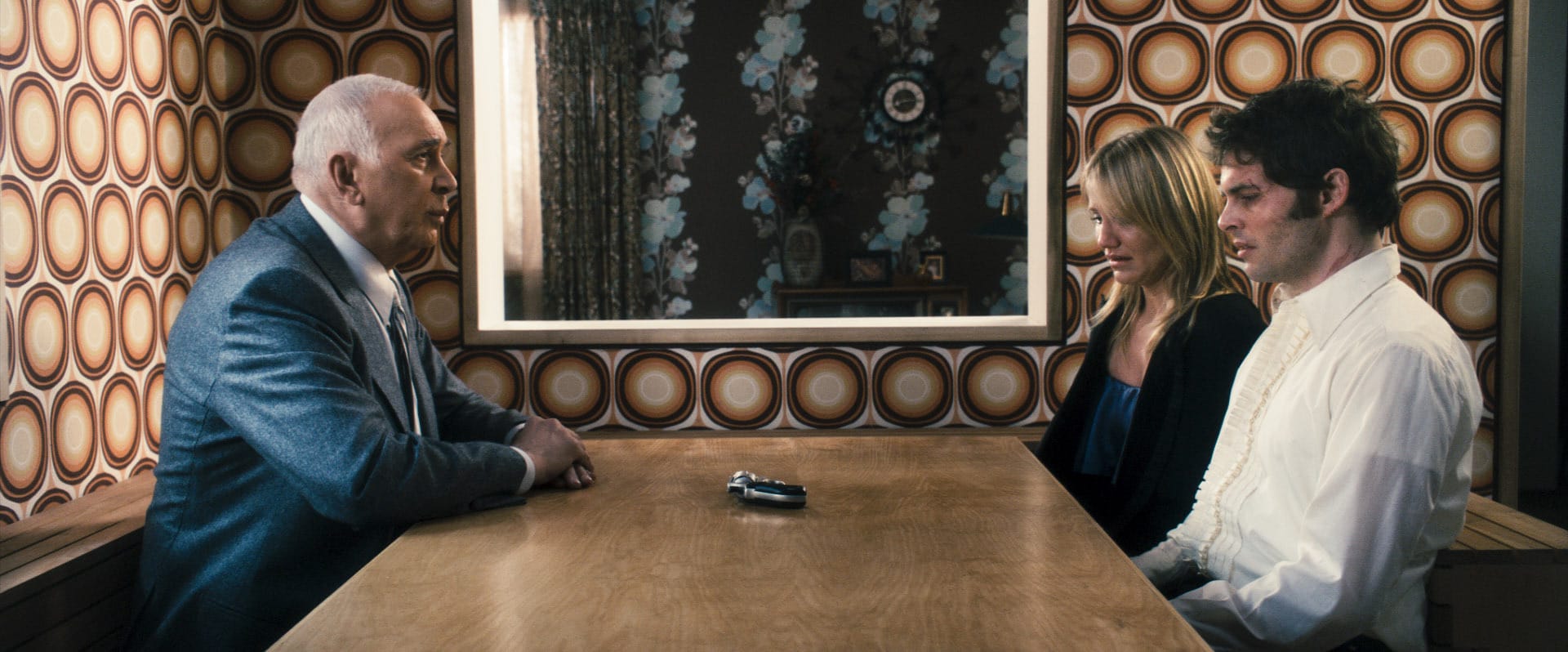
The Box continues his preoccupations, creating another sci-fi tinged thriller within another distinct American period, the transformative mid-70's. Cameron Diaz and James Marsden star as a performatively affluent couple suffering from the economic strain that comes from living outside of their means presented with a moral dilemma that could save them from their woes: push a button to simultaneously kill another human they do not know and receive one million dollars. The drama, interestingly enough, does not come from the build-up to decision, but rather the aftermath. Kelly manages to deliver some incredible visuals and tense moments despite the script's tendency of unnatural dialogue and over explanations. It remains something curious, if not as successful, in my opinion, as Southland Tales.
The Happening (2008):
M. Night Shyamalan's science fiction throwback is mostly devoid of thrills, chills, spooks, and scares. It features awful dialogue delivered terribly by everyone (except the one turned in by the always reliable John Leguizamo) and flat, unremarkable visuals. But let me tell you one thing – this movie was on constantly when I was a heavy drinker, and brought so much laughter and joy into my life. I was borderline convinced that this was an intentional stinker, a wooden mess made to pay homage to the type of dreck mocked by the crew of the Satellite of Love on Mystery Science Theater 3000.
Now, on my first revisit since becoming sober several years ago, I don't hold the same opinion exactly, but I still love a lot of the stilted silliness of this deeply unserious film. Is something truly awful if it brings one joy? At what point do we discard the concept of "so bad it's good" when, in this instance, the bad is good?